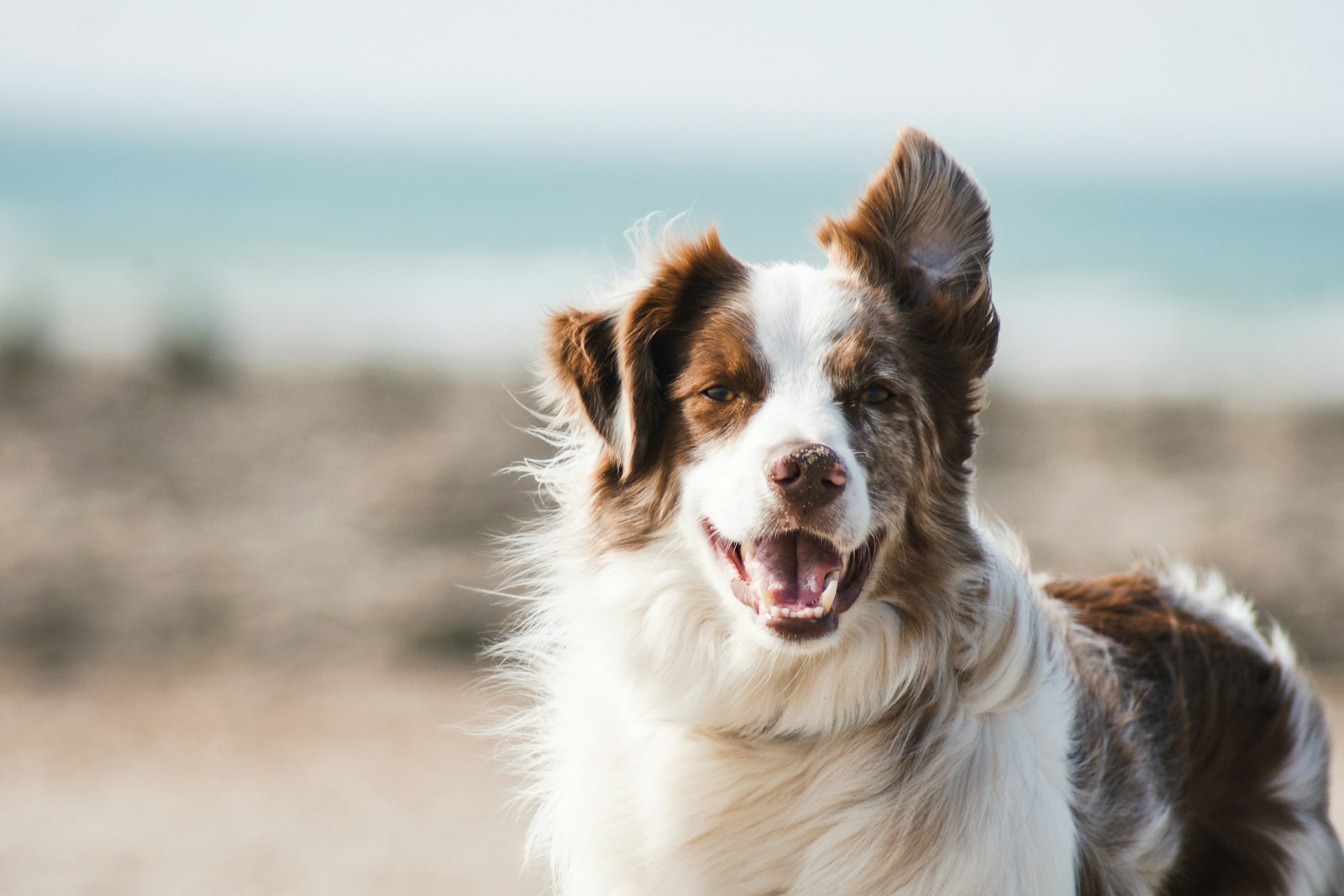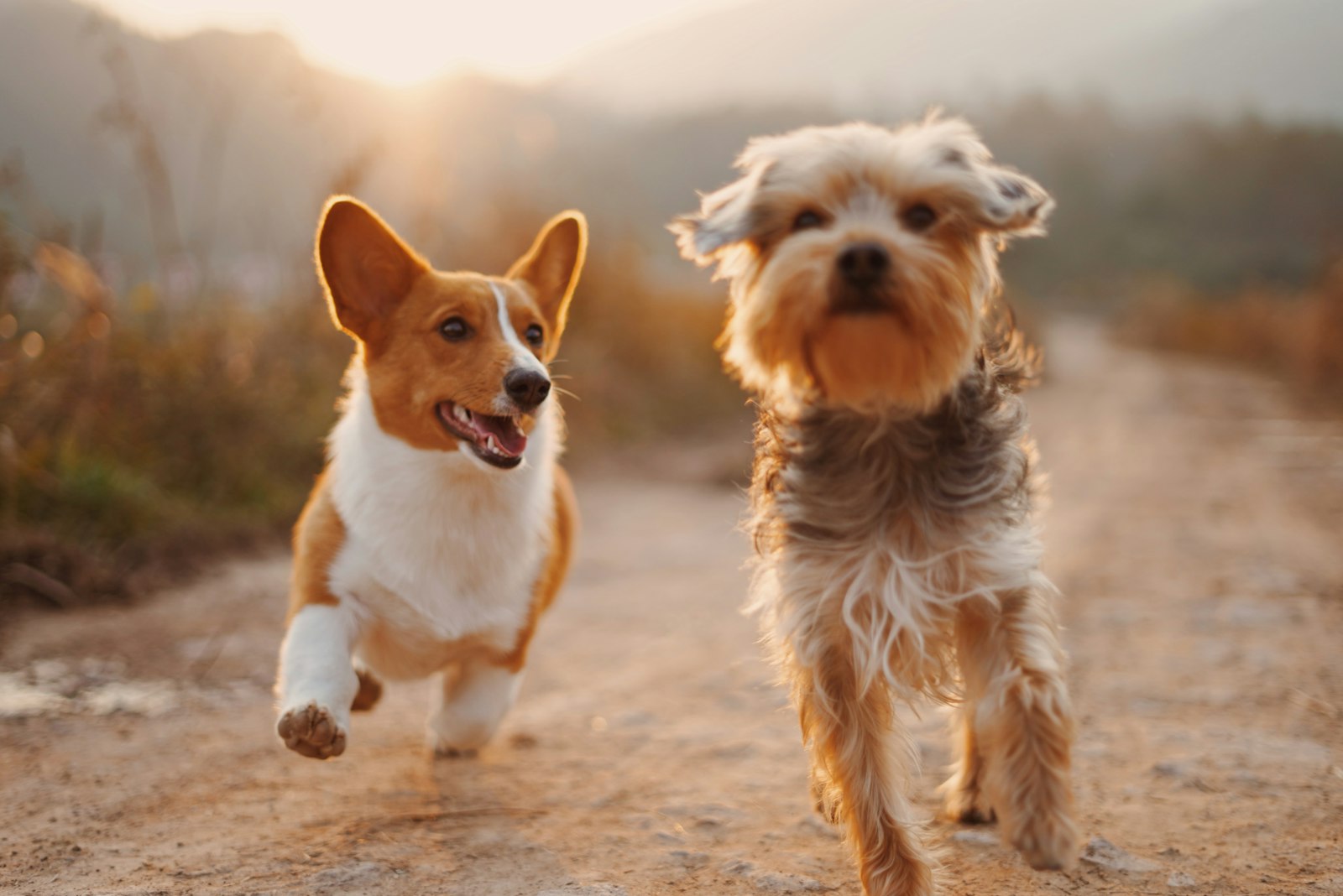
A pack walk costs less because one walker is being paid once to move four to eight dogs at the same time. That is the entire economic argument, and it is a real one. What it buys you is a cheaper walk. What it costs your dog is the thing you were actually hiring for — somebody watching your dog.
If you have been comparing dog walkers around Monmouth and Ocean County, you have probably noticed the price spread and wondered what explains it. Some of it is drive time and experience. But the biggest single lever on price is how many dogs go out on one leash-hand at once. It is worth understanding exactly what that tradeoff buys and what it costs before you decide, because the marketing on both sides tends to skip the honest part.
What a Pack Walk Actually Is
A group or "pack" walk means one walker takes several dogs out together. In practice that usually looks like a van route: the walker picks up dogs from three or four houses, drives them to a park or a trail, walks the group for thirty to sixty minutes, then drops everyone back off. Some services cap the group at three. Some run six or eight. A few run more than that.
The dogs in the group are typically not your dog's friends. They are the dogs whose owners happened to book the same time slot in the same zip code cluster. That is not a knock on the model — it is just what the logistics require.
The Honest Case for Group Walks
Group walking is not a scam, and pretending it is would be dishonest. It has genuine advantages, and for a specific kind of dog it can be excellent:
- It is cheaper — usually 30–50% less per walk than a solo visit, which adds up fast at five days a week.
- Real social time for a confident, well-socialized, dog-friendly dog who genuinely enjoys other dogs and has the skills to read them.
- Longer outings, because the route is built around a trail or park rather than a thirty-minute window on your block.
- Harder physical exercise for a high-drive young dog who is under-worked by a leash walk around the neighborhood.
If you have a three-year-old lab who has been to daycare since puppyhood, lights up at the sight of another dog, and comes home from the dog park genuinely content — a good pack walker with a small, screened, consistent group is a fine choice. Take it.
Where Pack Walks Break Down
Nobody Is Watching Your Dog Specifically
This is the whole thing, and everything else is downstream of it. A walker managing six dogs is running crowd control. Their attention is distributed across six leashes, six sets of body language, and whatever is coming down the trail at them. Yours gets roughly one-sixth of it.
Which means the small stuff gets missed — and the small stuff is the early stuff. A slight limp on the left rear. Loose stool. Not finishing the water bowl. Suddenly slowing down at the twenty-minute mark when they normally do not. Refusing a treat they have never refused. Those are the observations that get a dog to the vet a week early instead of a week late, and they are the first casualty of a crowded leash-hand.
Your Dog Walks at the Group's Pace
A group moves at a negotiated speed that suits nobody exactly. A senior with stiff hips gets dragged along faster than they should. A young shepherd gets held to a stroll. And sniffing — which is most of what a walk is for, mentally — is the first thing sacrificed, because six dogs cannot all stop at six different mailboxes and still finish the route on schedule. We got into how much this matters for older dogs in walking a senior dog.
You Are Paying for Van Time
On a route model, a "45-minute walk" often is not 45 minutes of walking. Some of it is riding in a crate in a van while the walker loops through Middletown collecting the rest of the group. Ask for the split. A reputable group walker will tell you honestly; the answer is frequently 20 minutes of transit inside a 60-minute booking.
Risk Compounds With Group Size
Each additional dog does not add risk in a straight line — it multiplies the number of pairs that can go wrong. Three dogs is three possible pairings. Six dogs is fifteen. And a scuffle between two dogs on a trail is not a two-dog event when four other leashes are wrapped around the same person's wrist.
There is no authority checking group sizes for you, so the cap is whatever the individual walker decides it is. Ask what theirs is, ask whether they screen for dog-dog compatibility before adding a dog to a group, and be skeptical of anyone who does not have a firm number.
The Illness Math
Kennel cough, canine influenza, giardia, and fleas move through groups the way they move through daycare. Your dog is sharing air, water bowls, and ground with five other households' dogs, several days a week. That is a manageable risk with current vaccines and a walker who enforces them — but it is a real one, and it is zero on a solo walk.
Dogs Who Should Not Be in a Pack, Period
- Reactive or anxious dogs. A group walk is close to the worst possible environment — sustained proximity, no escape, no decompression distance. More on this in finding a walker for a reactive dog.
- Seniors and arthritic dogs, who need to set their own pace and stop when they are done.
- Puppies under about six months, whose vaccine series is incomplete and whose walk schedule is short and frequent, not long and hard.
- Small dogs in a group with large ones. Predatory drift is rare, but it is real, and the size gap makes ordinary rough play dangerous.
- Dogs on activity restriction after surgery or an injury.
- Dogs with medication timing, GI issues, or anything that requires actual observation.
- Any dog who does not genuinely like other dogs. Tolerating them is not the same as enjoying them, and a lot of dogs get read as "fine" when they are simply shut down.
What the Price Difference Actually Buys
Around Red Bank, Rumson, Holmdel, and Colts Neck, a solo 30-minute walk generally runs in the $25–$35 range, and a group walk in the high teens to low twenties — we broke the local numbers down in what dog walking costs in Monmouth County. Call the gap $10 a walk.
At five walks a week that is roughly $50 a week, or about $2,600 a year. That is not nothing, and if the budget is the budget, a good group walker beats no walker by a wide margin. But be clear about what the $10 is buying: undivided attention, your dog's own pace, no van time, no group-illness exposure, no compatibility gamble, and one person who knows your dog well enough to notice the day they are off.
Questions to Ask Before You Book Either One
- How many dogs are on a walk at once? If the answer is vague, that is the answer.
- How much of the booked time is transit? Ask for the actual split.
- Do you screen for dog-dog compatibility, and how? Ask what happens if it does not work out.
- What vaccines do you require, and do you verify them?
- Is it the same walker every visit, or whoever is on the route that day?
- What is your incident protocol if there is a scuffle or an injury mid-walk?
- Are you insured and bonded, and what does the policy cover in a group setting?
Those questions sort good walkers from careless ones faster than any review page, in either model. Our full checklist lives in how to choose a dog walker in Monmouth County.
Why Happy Tails Is Solo, Always
We do not run pack walks. Not as an upsell tier, not on request — every Happy Tails walk is one-on-one, your dog only, never a group. Your walker arrives, your dog goes out, and for that entire window your dog is the only thing that person is responsible for.
That is a deliberate choice about what a walk is supposed to accomplish. It means your dog gets to stop and sniff the fence line in Brick for as long as they want. It means a senior in Toms River sets the pace and turns around when they are tired. It means the person on the leash notices the limp on day one, and texts you about it. And it means there is no group your dog has to be compatible with in order to get walked at all — which is why the anxious dogs, the seniors, the recovering-from-surgery dogs, and the ones who simply do not like other dogs end up with us.
It costs more. We would rather be honest about why than pretend the cheaper option does not exist.
Want a walker who is watching your dog and nothing else — solo every visit, same walker every time, across Monmouth & Ocean County, NJ? Book a Meet & Greet.