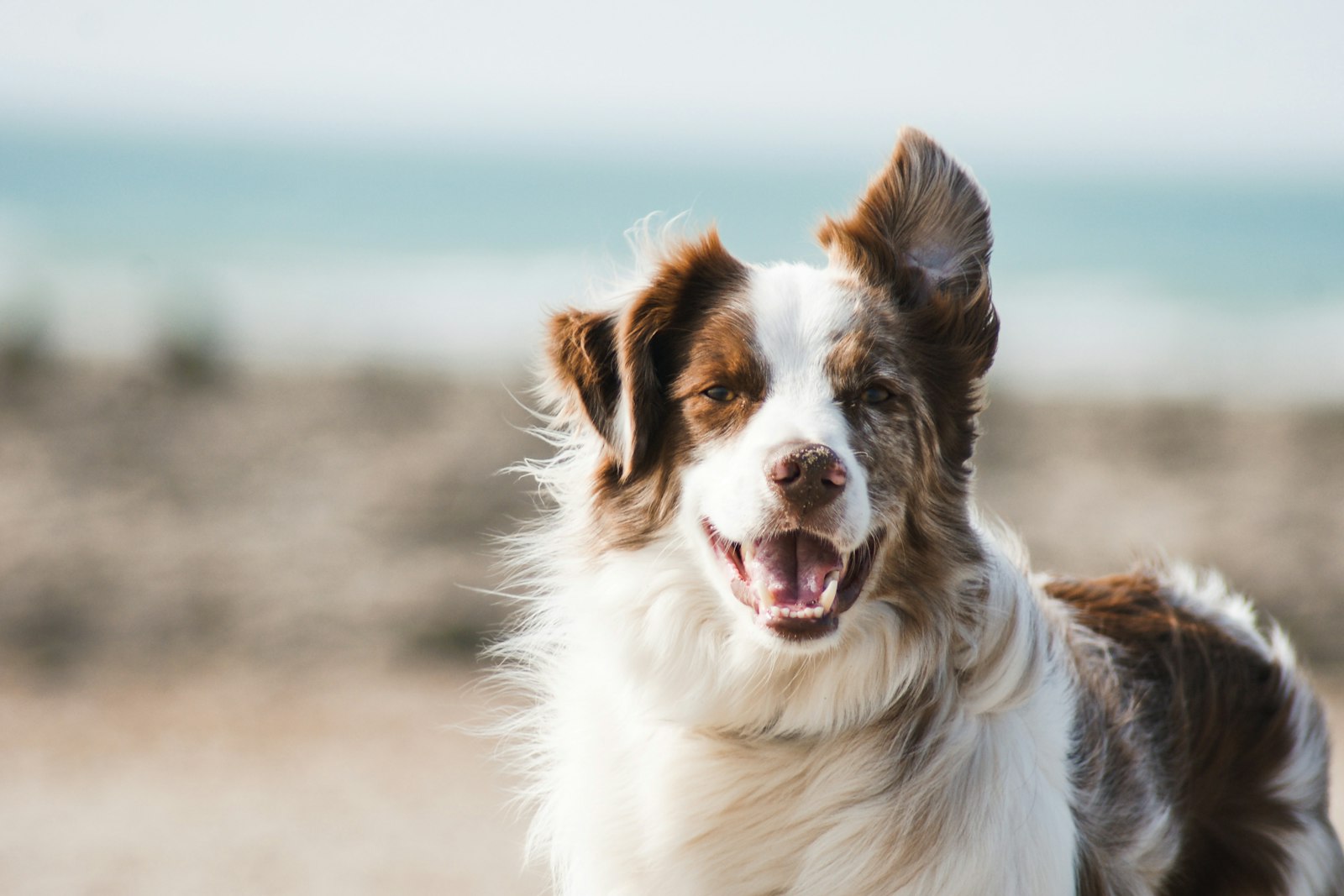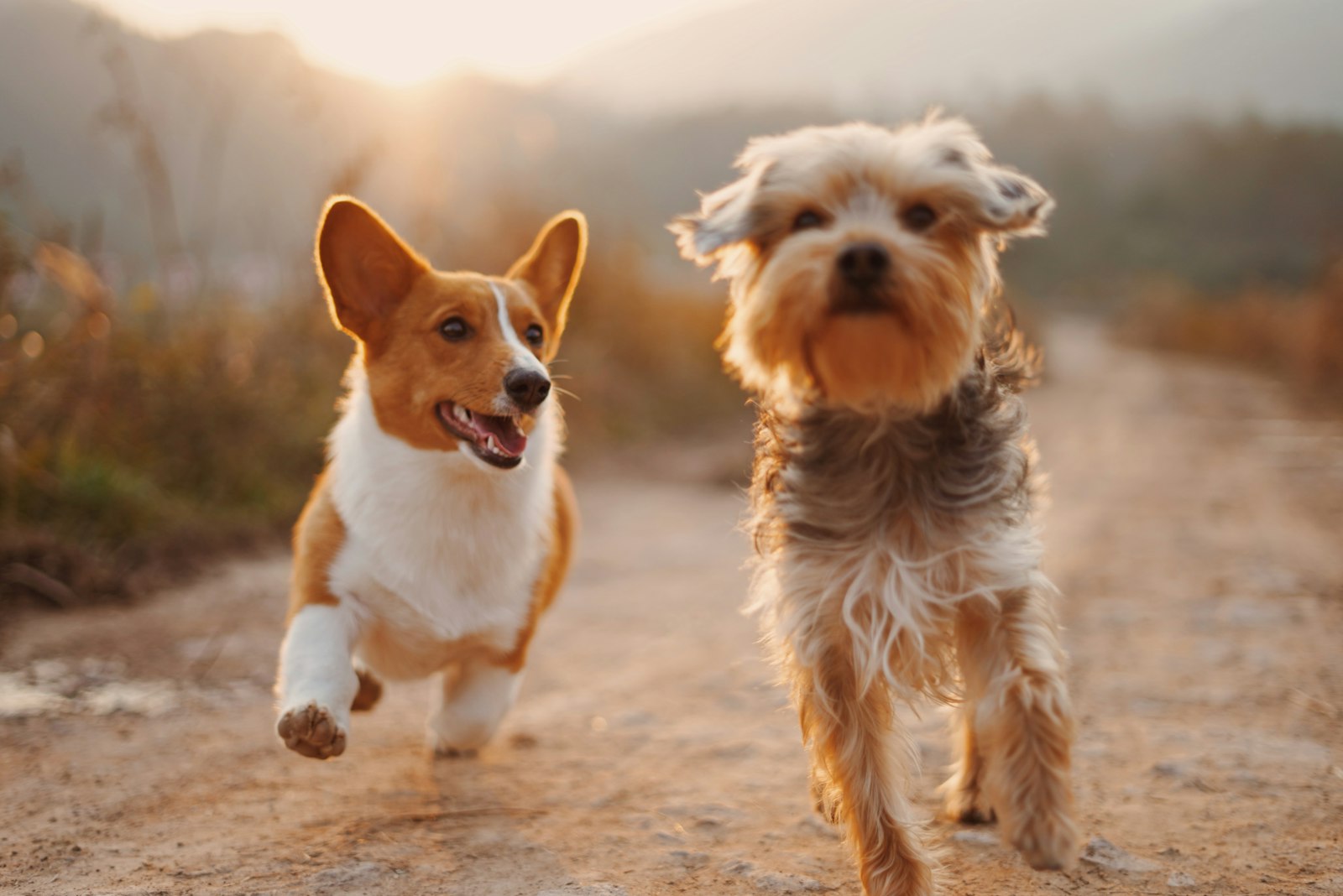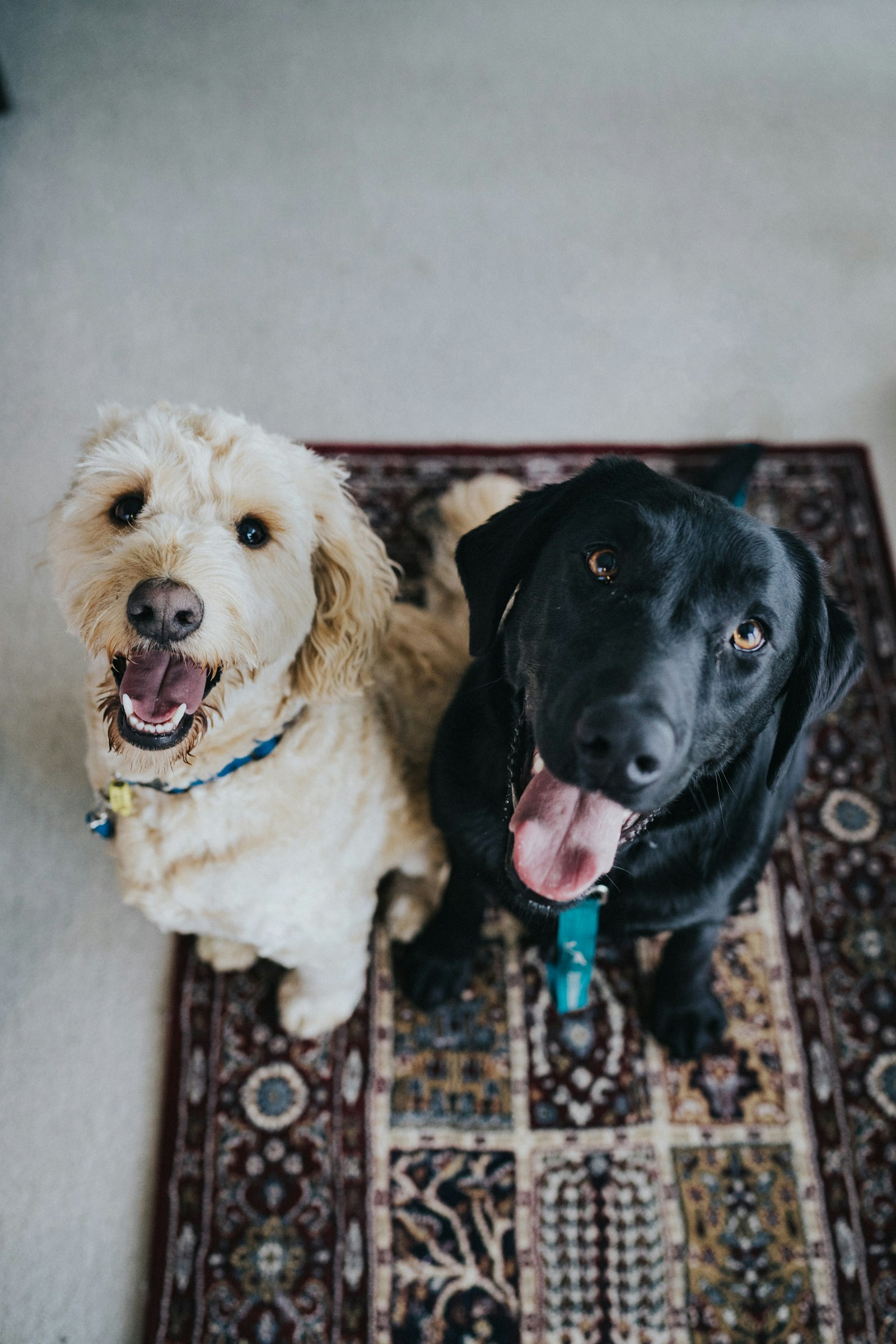
Walking two dogs together works well when both dogs walk politely on a loose leash, move at roughly the same pace, and stay calm around distractions. If one pulls, lunges, or sets off the other, walk them separately, at least until their leash manners catch up. Most two-dog homes end up somewhere in the middle: together on easy days, separately when one dog needs more.
We walk a lot of two-dog households in Red Bank, Rumson, Holmdel, Middletown, Colts Neck, Brick, and Toms River. Here's how we think about it, and how you can decide what's right for yours.
When Walking Two Dogs Together Works
Walking your dogs as a pair is efficient, and plenty of dogs love it. It tends to go well when:
- Both dogs walk on a loose leash. One puller is manageable. Two pullers in different directions is how people end up face-down on an icy sidewalk.
- They're a similar size and energy level. A young Lab and a twelve-year-old Shih Tzu want completely different walks.
- Neither dog is reactive. Dogs feed off each other. If one barks at the mail truck, the other often joins in.
- They actually like each other. Housemates who tolerate each other indoors don't always enjoy sharing a sidewalk.
- You can handle both if something goes wrong, like a loose dog coming at you or a squirrel bolting across the road.
When to Walk Them Separately
Separate walks take more time, but they're often the better choice. Consider splitting them up if:
- One dog is a puppy. Puppies need short, frequent outings and lots of sniffing and training. An adult dog's walk is too long and too fast for them. Our guide to how often to walk a puppy covers the timing.
- One dog is a senior or recovering from surgery. An older dog with stiff hips shouldn't have to keep up with a younger sibling. See how much exercise a senior dog needs.
- One dog is reactive or anxious. A nervous dog needs a calm walk and room to avoid triggers, which is hard with a second dog in tow. Read more about walking reactive and anxious dogs.
- One dog pulls hard. Leash training goes faster one dog at a time. Our post on why dogs pull on the leash explains why.
- Their exercise needs are very different. A high-energy herding breed may need an hour of brisk walking, while a Basset Hound is happy with a slow 20 minutes and a lot of sniffing.
A Middle Ground Many Families Use
You don't have to pick one approach forever. A lot of two-dog homes mix it up:
- Together for the short potty walk, separately for the longer exercise walk.
- Together on quiet routes, like a residential loop in Holmdel or a weekday morning in a Middletown neighborhood, and separately on busy ones, like Broad Street in Red Bank or a crowded boardwalk.
- One-on-one training walks a few times a week, so each dog learns good habits before you combine them.
Tips for Walking Two Dogs at Once
If your pair walks well together, a few habits make it safer and easier:
- Use two separate leashes rather than a coupler at first. You get more control over each dog, and you can split them up quickly if you need to.
- Keep each dog on the same side. Consistent positions mean fewer tangles.
- Skip retractable leashes. Two retractable leashes are a tangle and a safety hazard waiting to happen.
- Use well-fitted harnesses or collars and check them often. A dog who backs out of a harness while you're holding a second leash is hard to catch.
- Watch for winter footing. Shore towns salt everything, and two dogs pulling on ice is a fall risk. Our post on how cold is too cold to walk your dog in NJ covers paw and sidewalk safety.
- Let each dog sniff. Sniffing is mental exercise. Take turns pausing so neither dog's walk is just a forced march.
Does a Second Dog Replace a Walk?
Not usually. Two dogs who wrestle and chase each other do burn some energy, but most housemates spend the day napping, not exercising. A walk gives each dog new smells, a change of scenery, and a bathroom break that a backyard and a sibling can't fully replace. If you're wondering whether your pair is getting enough, our guide to how many walks a day a dog needs is a good place to start.
How Happy Tails Handles Two-Dog Homes
Every Happy Tails visit is one household at a time. We never mix your dogs into a pack with other people's dogs. That's the whole point of solo walks, and it's even more important when you already have two dogs to manage. You can read more about why in pack walks vs. solo walks.
Here's how it works in practice:
- Pricing is simple. A 30-minute solo walk is $30, a 60-minute walk is $50, and each extra dog in the same household is +$5 a visit.
- Together or separate is your call, and we'll help you decide. At the Meet & Greet, your walker will see how your dogs act on leash and recommend walking them as a pair, taking them out one at a time, or booking a longer visit so each dog gets real time.
- The same walker every time. Your walker learns that one dog lags behind and the other wants to chase every rabbit in Colts Neck, and plans the walk around both.
- Updates after every visit, so you know how each dog did, not just "the dogs were walked."
Two dogs means twice the personality. They deserve a walker who pays attention to both.
Two dogs at home? Solo, one-household-at-a-time walks across Monmouth & Ocean County, NJ. Book a Meet & Greet.